
-
 [1]
-
 [2]
-
 [3]
-
 [4]
-
 [5]
-
 [6]
-
 [7]
-
 [8]


The country of the roses – this is the visiting-card of Bulgaria to the world, and Kazanlak is the heart of the Rose valley and the natural geographic centre of Bulgaria. Here the nature has brought together the beauty and the grandeur of Stara planina mountain with the fertileness over the Tundzha river and warm mineral springs. The climate and soil conditions in this Bulgarian piece of Heaven are most suitable for growing of oil-bearing rose and number of other ethereal-oil crops. Brought to the Bulgarian lands from Asia in 19-th century, the rose is the greatest fortune of Kazanlak valley.
During ancient times, on the territory of the picturesque Rose valley existed rich Thracian culture. The excavated archeological objects are of a big interest for the scientists and for the tourists. Not far from Kazanlak, under the waters of the Koprinka dam, is situated the only one entirely studied by now Thracian city Seuthopolis – ancient city founded by the Thracian king Seuthos III. In the Kazanlak valley are situated Thracian tombs – masterpieces of the monumental and fine arts in antiquity. Inside were buried Thracians from the nobility, sometimes with their horses. Less wealthy Thracians were cremated, with a humble grave with specific wares. In one of the hundreds of mounds, on 19-th of April 1944 a group of soldiers accidentally discovered the worldwide famous Tomb of Kazanlak with splendid mural paintings since the end of IV-th century BC.
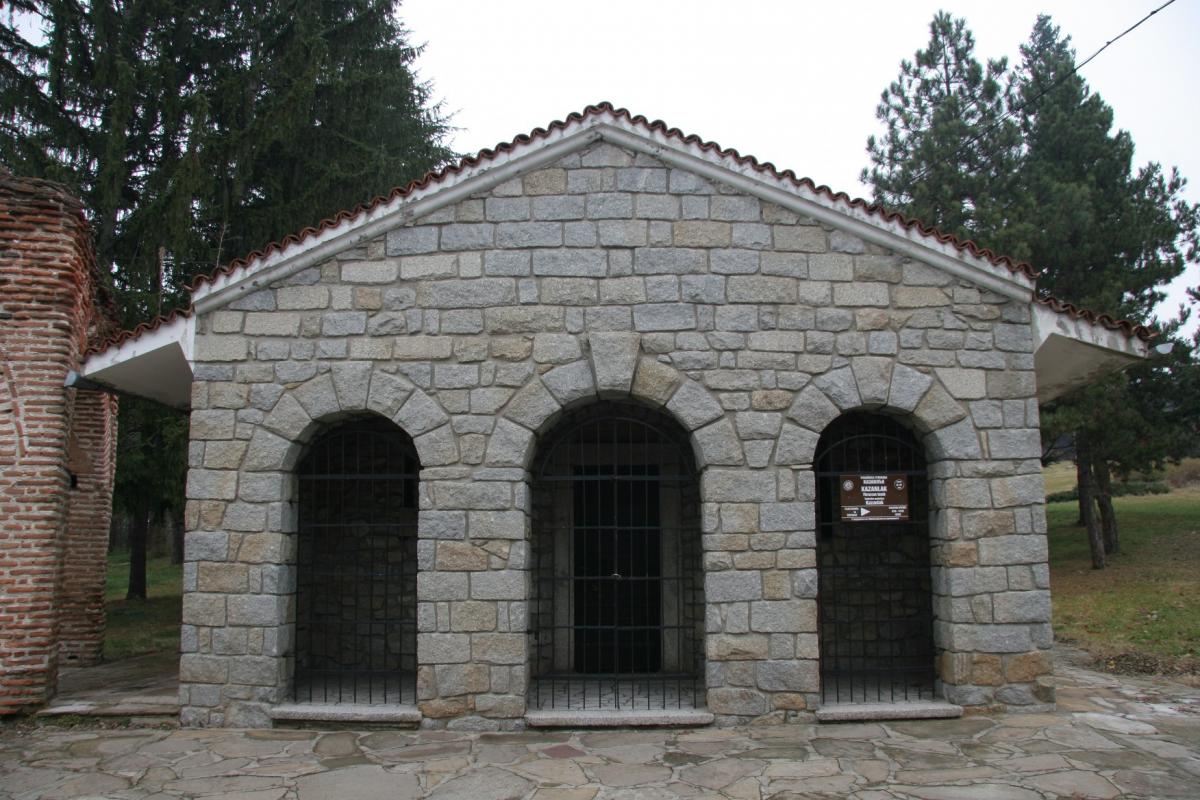
In the oldest part of Kazanlak you can visit the historical and ethnographic complex ‘Kulata’ (‘The Tower’) with restored architectural and historical monuments since the Renaissance age. In October 1976 in two of the restored houses, the historical museum ‘Iskra’ organizes ethnographic expositions showing the urban and the rural way of life of the middle class in the Kazanlak region at the end of XIX century.
In the urban (Hadzhienova) house for some time lived Petar Topuzov - the founder of the Historical museum ‘Iskra’. The restored interior shows the passage from the traditional rural life to the urban life, the coming of the European lifestyle and culture to the life of the townsfolk of Kazanlak which was connected to the trade of rose oil over the world. The house in rural style is with the typical for the sub-Balkan villages asymmetric architecture, peculiar for the end of XVIII and beginning of XIX century.
The assembled collection reflects the traditional lifestyle of the townsfolk of Kazanlak area.
Under the sunshade is exhibited varied equipment used for cultivation of the land. The yards of both of the houses are shaped with cobblestone and with the typical flowers, evergreen bushes and trees. At the Ethnographic museum, a stall has been arranged where one can buy products from oil-bearing rose and other ethereal crops of highest quality.
In the town you can visit also the house of the famous Bulgarian writer, painter and public figure Dimitar Chorbadzhiyski – Chudomir which was announced as museum on the next year after his death. With its unique atmosphere, the house is an architectural record of culture with a national significance. The museum complex includes artistic and documental exhibition situated in three halls with a total area of 300 sq.m, a modern repository and a cozy conference hall with multimedia equipment. The museum is municipal culture institute and takes care of the preserving, examination and popularization of the exclusively rich creative heritage of Chudomir. It keeps more than 15,000 original manuscripts, paintings, drawings, letters, books and personal belongings of Chudomir and his wife – the painter Mara Chorbadzhiyska.
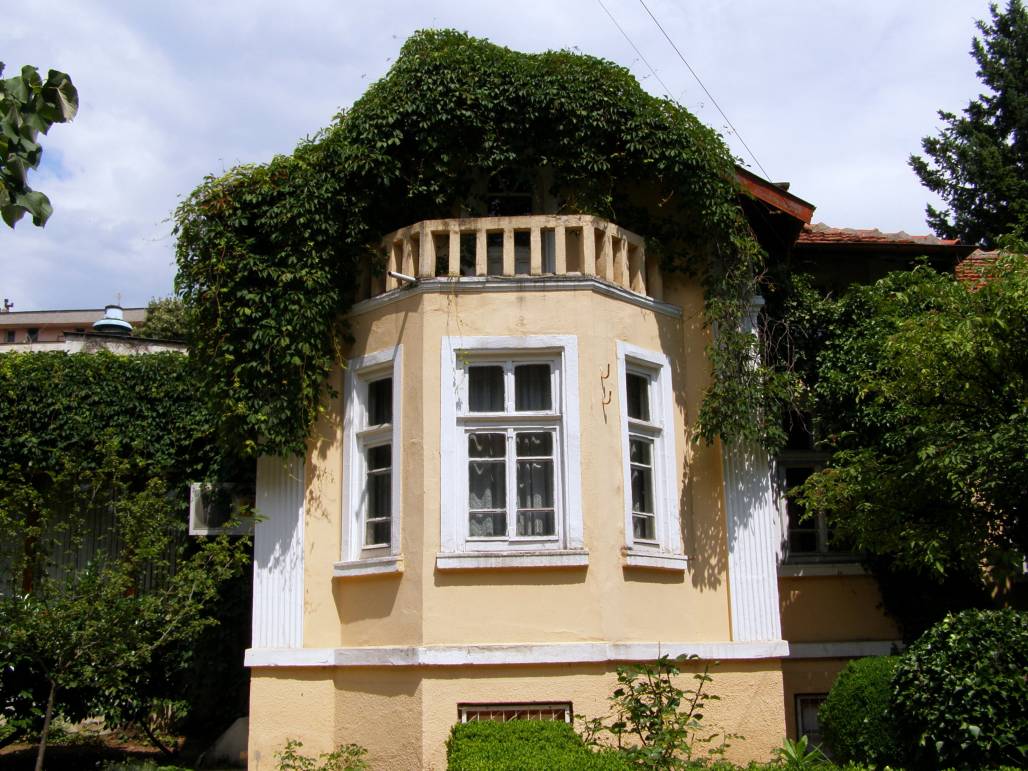
This is the only one literature and artistic museum in Bulgaria. It was included in the movement ‘One hundred national tourist objects’. It is a seat of the prestigious culture foundation ‘Chudomir’.
Except for the magic of the oil-bearing rose and of the rich Thracian art, Kazanlak is also known as town of artists. Here are born many artists, some of whom reach one of the highest peaks of the Bulgarian fine arts – for example, Petko Klisurov, Ivan Milev, Ivan Penkov, Dechko Uzunov, Nenko Balkanski, Vasil Barakov, Mara Yosifova etc. Therefore, the fact that Kazanlak owns one of the oldest and richest galleries in the country is no coincidence.
In 1901, in Kazanlak was founded Museum for antiques and arts, where, by initiative of the artist Ivan Enchev-Vidyu, was created the earliest artistic collection in the country. Due to his unflagging efforts and persistent invitations to his colleagues from painting school, during the period 1902-1906 came works of the sculptors Zheko Spiridonov and Boris Schatz, of the painters Georgi Mitov, Zahari Zhelev, Boris Mihaylov etc. Seminal was the period 1930 – 1958 when director of the museum and of the gallery is artist and writer Dimitar Chorbadzhiyski – Chudomir, who, with his insight and personal contacts with the artists of his time succeeds to enrich the collection with works and authors of national significance.
You can get acquainted with the home of Acad. Dechko Uzunov, which was restored by the Municipality of Kazanlak during his lifetime but was opened for visitors after his death. Executing his will, his wife Olga Uzunova donated to the gallery 93 of his paintings which are now exhibited in his home.
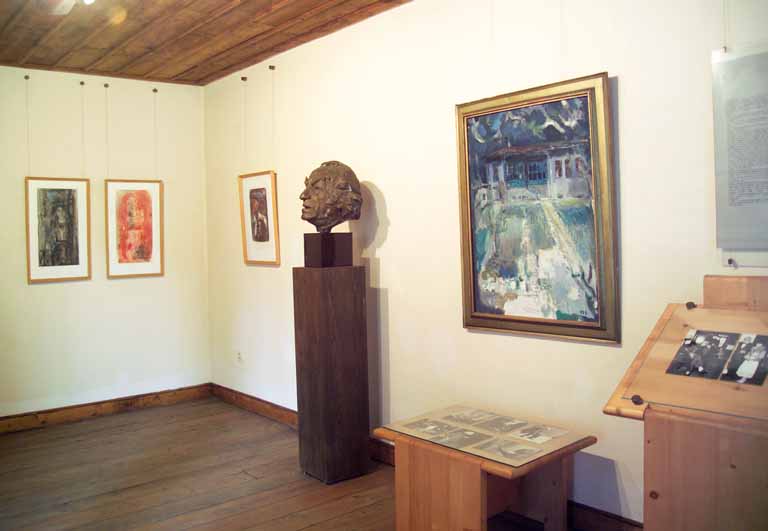
The exhibition is situated in the four rooms of the house and in the specially built for the purpose exhibition hall. The most significant part of the donation is presented there. 21 paintings from different creative periods donated by Olga Uzunova, as well as 4 works of Dechko Uzunov donated by the nephews of the artist – Atanas and Hristo Neykovi – are shown there. In exhibition hall are presented 42 aquarelles and paintings of the artist, as well as his last self-portrait.
In the town, you can also visit the birth-house-exhibition of the distinguished painter Prof. Nenko Balkanski, lecturer in the Academy of Arts and Head of the Department of Painting. After his death, the Municipality of Kazanlak restored his birth-house and his wife Lilyana Balkanska donated to the Art gallery 267 paintings and 1271 black and white drawings.
Here is also the birth-house of the remarkable composer and musical public figure Petko Staynov who enriches the Bulgarian musical culture and significantly contributes to its development. Composer with a huge creative gift, with a wide musical and general culture, and last but not least – with a sense to the ideas of the day, he devoted his life and his talent to the Bulgarian music and musical culture, to the Bulgarian Academy of Sciences.
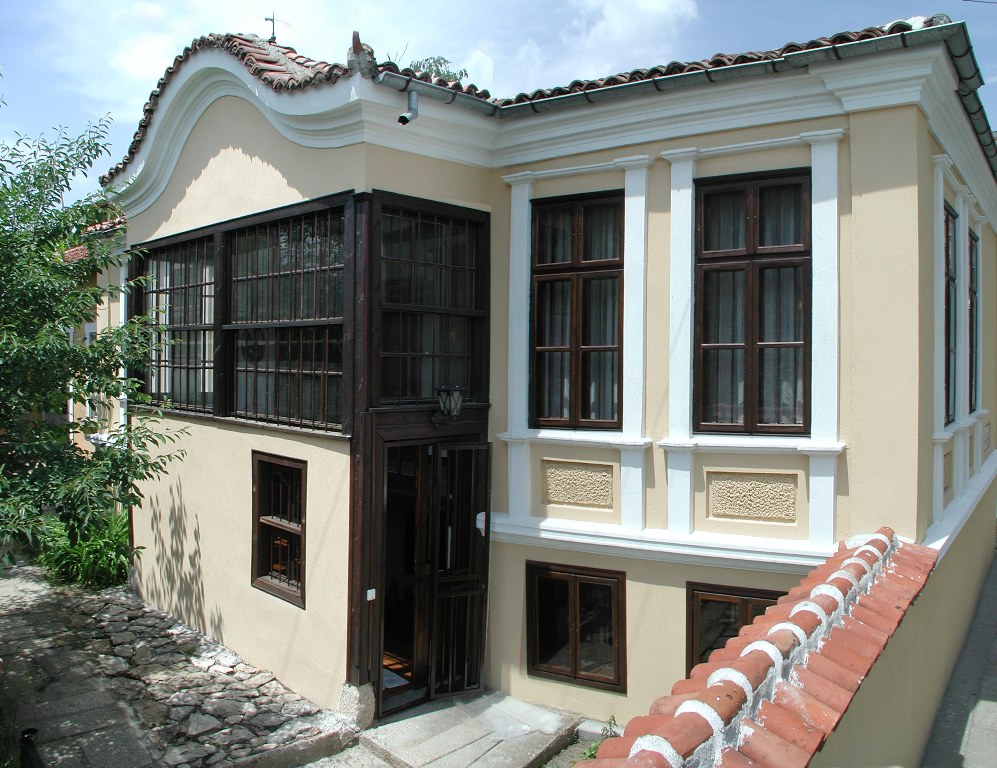
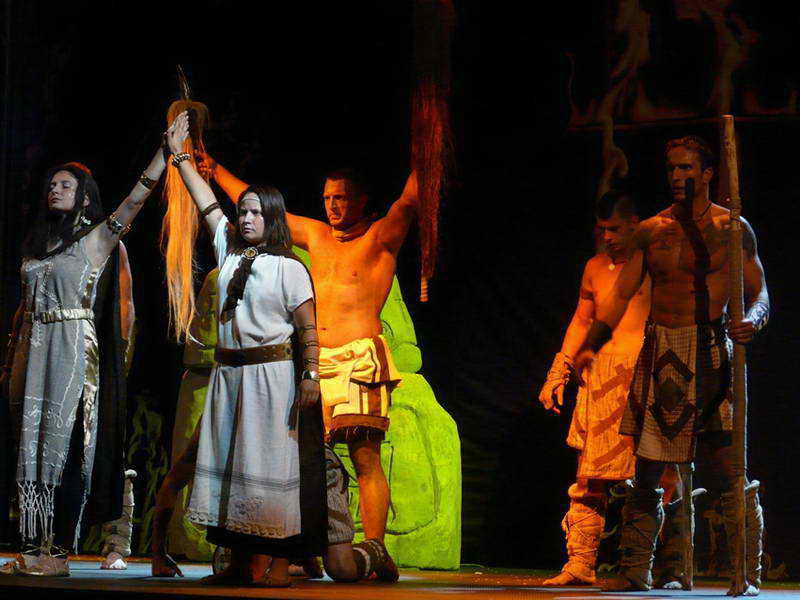
In Kazanlak you can visit one of the oldest and richest historical museums in the country – historical museum ‘Iskra’ and the only one if its kind Museum of the rose and if you happen to be there in the middle of August or beginning of September you will become a witness of numerous culture events like the performance ‘New Thracians’, demonstration of Thracian Martial arts in a ‘Thracian bivouac’, meetings of new technologies and photography, street parade on the streets of Kazanlak, number of concerts and open-air exhibitions where professionals and amateurs show their art.
Near Kazanlak is located Pavel Banya – a known culture and healing centre with mineral springs, hydropathic sanatoria and hotels. In the foots of Stara Planina is situated the town of Shipka which is the heart of the Valley of the Thracian kings. Around it are situated Thracian temples used as tombs and mausoleums of Thracian rulers and senior noble people. Right on East are the mounds Shushmanets, Gryphons and Helvetia, where stone temples were preserved. Near them was piled up the Sineva mound. West from the town are Sashova mound and Golyama Arsenalka with excellently preserved stone temples, as well as Malkata na Binyova mounds with wealthy king graves. Approximately 500 meters Southern from Golyama kosmatka is the only one tomb which has been identified with the name of a specific Thracian ruler – the tomb of Seuthus III. Western from it are Ostrusha with a graveyard-religious complex, and Svetitsata (‘The Saint’) with the king grave from the end of 5-th century BC and the only known in the Thracian lands massive golden mask. Between Shipka and the village of Kran is the temple – tomb in Sarafova mound which was built from bricks and its walls are covered by multi-coloured decoration.
The remaining remarkable monuments are between the villages Gabarevo (Lulcheva mound) and Rozovo (Slavchova mound), as well as at the town of Maglizh (The tomb of Maglizh, the facilities at Kesteleva, Racheva, Fartunova and Nanina mounds). The easternmost tomb built from stone slates and bricks is near the village of Oryahovitsa, Stara Zagora area.
All temples-tombs except for the last one are in the immediate vicinity of the asphalt roads Shipka – Plovdiv, Kazanlak – Gabrovo, Kazanlak – Burgas.
In the area is located the unique historical and architecture preserve ‘Shipka – Buzludzha’ which, in a perfect way, combines the beautiful nature of Stara planina mountain and the historical monuments connected to important events from the Bulgarian history.
Climbing to each of these magnificent monuments you will fill yourself up with the heroic impulse of the thousands of volunteers who gave their lives for the Bulgarian freedom.
The article was prepared with the kind cooperation of the Municipality of Kazanlak.